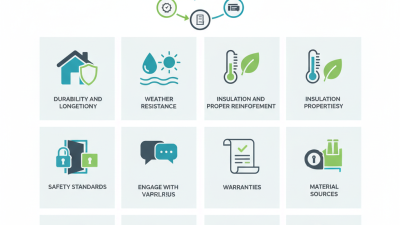
Choosing the right Pvc Door supplier is more than comparing catalog prices. It affects security, insulation, installation time, and long-term maintenance. A reliable supplier should explain profile thickness, reinforcement, hardware grades, glass options, and warranty limits in clear language. During a site visit, inspect corner joints, drainage holes, seals, and locking points. Small details often reveal production discipline. Ask for recent project references, not only staged showroom photos. A school entrance, apartment balcony, or coastal home can expose different performance needs. Experience matters here. Suppliers who understand local weather can recommend suitable sealing systems and surface finishes.
This guide presents seven practical tips for evaluating suppliers with confidence. It considers product consistency, factory capability, technical support, communication, delivery control, certifications, and after-sales responsibility. Request physical samples and compare frame color, weld quality, gasket flexibility, and operating smoothness. A dependable company should provide test records that match the offered model, not a similar product. It should also clarify measurements, packaging, replacement parts, and response times before payment. Yet no supplier is perfect. Even a respected manufacturer may miss a deadline or overlook a detail. That is why written specifications and staged inspections remain valuable. A polished website proves little. Direct questions, documented answers, and careful follow-up provide stronger evidence. The goal is not simply to buy a Pvc Door. It is to choose a partner that can support performance from quotation to installation and beyond.

Choosing the right PVC door supplier starts with defining your project clearly. Measure each opening, including width, height, wall thickness, and floor level. Record the intended use, such as a bathroom, balcony, office, or busy entrance. Moisture, noise, wind, and daily traffic require different door specifications. Write these priorities before contacting suppliers. Otherwise, attractive prices may distract you from practical needs.
Tip: Prepare a simple requirement sheet. Include door size, opening direction, color, glass type, locking needs, delivery date, and installation conditions. Ask suppliers to confirm each item in writing. A reliable supplier should explain profiles, reinforcement, seals, drainage, and hardware without confusing language. Request technical drawings or a physical sample when possible. Small details matter.
I once focused too heavily on appearance and underestimated installation space. That mistake created delays and extra adjustments. Now, I check frame depth, threshold height, nearby walls, and furniture clearance early. Compare warranty terms, replacement support, production experience, and quality inspection procedures. Also ask how the supplier handles measurement errors or damaged components. Their response often reveals more than a polished catalog. Leave room in the budget for fitting, transport, and unexpected site conditions.
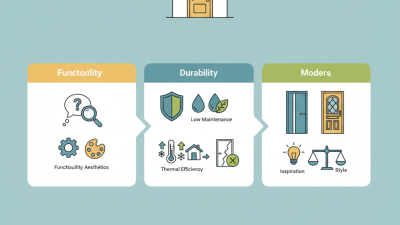
7 Tips for Choosing the Right PVC Door Supplier
Verify Supplier Experience, Certifications, and Product Quality
A supplier’s experience should appear in more than a polished website. Ask how many years they have produced PVC doors, which projects they have completed, and whether they can provide recent references. Request photos showing frames, hinges, seals, and finished installations. Real details matter.
Certifications need careful checking. Ask for current documents, issuing organizations, test standards, and product numbers. A certificate without a clear testing scope proves very little. Confirm whether it covers the exact door profile, hardware, and performance claims you need. Independent laboratory reports can reveal results for insulation, air leakage, water resistance, and repeated opening cycles.
Product quality should be judged from a sample, not promises. Inspect the corner welds, gasket fit, surface finish, locking points, and drainage holes. Open and close the sample repeatedly. It should feel firm, not strangely light or rough. Ask about batch inspections, raw material control, packaging, and replacement procedures. A reliable supplier should explain tolerances and admit where performance may vary. That honesty is valuable.
Speak with the technical team, not only a salesperson. Their answers should be specific and consistent. I once treated a low price as strong evidence, but later found that thin reinforcement increased installation problems. That mistake was avoidable. Request a written quotation, warranty terms, delivery schedule, and after-sales response time before making a decision.
| No. | Evaluation Dimension | What to Verify | Reliable Evidence | Practical Benchmark | Suggested Weight |
|---|---|---|---|---|---|
| 1 | Supplier Experience | Review years of relevant PVC door production, export experience, project references, production capacity, and after-sales procedures. | Dated project references, factory audit records, production photographs, capacity statements, and verifiable customer references. | At least 3 years of relevant manufacturing experience and at least 2 comparable completed projects that can be verified. | 15% |
| 2 | Certifications and Compliance | Confirm that the product and factory meet the legal and technical requirements of the destination market. | Valid certificates, declarations of performance or conformity, test reports, scope details, issuing laboratory information, and expiry dates. | For European projects, check applicable requirements such as EN 14351-1 and CE-related documentation; for other markets, verify the relevant local building codes and conformity rules. | 15% |
| 3 | PVC Profile and Material Quality | Assess profile design, reinforcement, corner welding, weather resistance, surface finish, and consistency between samples and mass production. | Technical datasheets, incoming-material inspection records, sample cross-sections, batch traceability, and independent test reports. | The selected profile should match the approved sample, include suitable reinforcement where required by the design, and show no visible warping, discoloration, cracks, or poor welds. | 20% |
| 4 | Performance Testing | Compare thermal insulation, air permeability, watertightness, wind resistance, operating durability, and acoustic performance when required. | Test reports issued for the same or technically equivalent door system, including dimensions, configuration, test date, and classification. | Use project specifications as the primary benchmark. Do not compare U-values, air, water, or wind classifications unless the tested configuration is equivalent to the proposed door. | 20% |
| 5 | Hardware, Sealing, and Security | Check hinges, locks, handles, multipoint locking systems, gaskets, drainage, glazing compatibility, and replacement-part availability. | Hardware specifications, installation instructions, cycle-test information, security test reports where applicable, and spare-parts list. | Hardware must be compatible with the door weight and dimensions, seals must be continuous and correctly fitted, and critical replacement parts should be available throughout the warranty period. | 10% |
| 6 | Quality Control and Production Consistency | Evaluate incoming inspection, in-process checks, final inspection, packaging controls, measurement accuracy, and corrective-action procedures. | Quality-control plan, inspection checklist, calibration records, nonconformance reports, batch records, and pre-shipment inspection results. | A documented inspection process should cover dimensions, color, welds, hardware operation, glazing, surface defects, labels, and packaging before shipment. | 10% |
| 7 | Quotation, Lead Time, Warranty, and Support | Compare total cost, tooling or customization charges, delivery terms, installation guidance, warranty exclusions, claim response time, and technical communication. | Itemized quotation, agreed technical drawings, written warranty, delivery schedule, service-level commitments, and a documented complaint process. | Choose a supplier whose quotation clearly defines specifications, Incoterms, packaging, payment terms, delivery schedule, warranty duration, exclusions, and response responsibilities. | 10% |
| Total Evaluation Weight | 100% | ||||
Choosing a PVC door supplier requires more than comparing a catalogue price. Compare resin quality, reinforcement, seals, glazing, and expected service life. The U.S. Department of Energy reports that windows can represent 25–30% of residential heating and cooling energy use. That figure makes frame geometry, low-E glazing, and airtight installation practical cost issues.
Ask for U-value, air-leakage, water-penetration, and wind-load test results. Shortcuts appear later.
Design should fit the building, not merely follow a fashionable sample. Check opening direction, threshold height, drainage paths, hinge capacity, and accessible hardware.
For customization, request shop drawings showing dimensions, colors, glazing beads, locks, screens, and replacement parts. A supplier should explain tolerances before production.
I would compare two physical corner samples, because photographs hide weld lines and weak seals. That extra check feels fussy. It can prevent expensive site adjustments.
Technical claims need traceable standards. For European projects, ask whether profiles follow EN 12608-1 and complete doors follow EN 14351-1. Verify testing methods such as EN 1027 for watertightness, EN 1026 for air permeability, and EN 12211 for wind resistance.
North American projects may use ASTM E283, E331, and E330 instead. Request dated laboratory reports, product identification, test pressure, and installation conditions.
Certificates without matching configurations prove little. Suppliers sometimes overstate performance. That deserves skepticism.
Choosing the right PVC door supplier requires more than comparing the lowest quotation. Ask for an itemized price covering frames, glazing, hardware, transport, removal, and installation. A cheap door can become expensive after unclear site charges appear. The U.S. Department of Energy reports that windows can cause 25–30% of residential heating and cooling energy use, so request U-values, air-leakage data, and test evidence. NFRC-certified performance labels provide a more reliable comparison than sales claims.
Read the warranty line by line. Confirm coverage periods for profiles, seals, glass, hardware, color fading, and labor. Also ask who pays for replacement transport. The 2023 International Energy Agency Global Status Report states that buildings and construction represent about 32% of global energy use. Proper sealing and installation therefore deserve serious attention. A supplier should provide trained installers, written tolerances, drainage details, and a final inspection record. Ask for photographs from comparable projects, not only polished showroom samples.
Delivery promises need measurable dates. Request production time, dispatch time, packaging standards, and the procedure for damaged goods. A delay of two weeks may affect plastering, security, and other trades. I once treated a low price as the strongest advantage; that judgment was incomplete. A slightly higher quote may include better supervision and safer handling. Still, suppliers can overstate service quality, so verify references, insurance, certificates, and payment stages before committing. Leave room for doubt. It protects the decision.
7 Tips for Choosing the Right PVC Door Supplier?
Review Customer Feedback and Confirm Long-Term Support
Customer feedback reveals more than product appearance. BrightLocal’s 2024 Local Consumer Review Survey reported that 91% of consumers read online reviews before choosing local services. Apply that habit to PVC door suppliers. Check comments about frame accuracy, delivery damage, installation guidance, and response speed. Recent reviews matter most. A five-year-old compliment may no longer reflect current service.
Look for detailed experiences, not perfect ratings. The Spiegel Research Center reported that products with five reviews were 270% more likely to be purchased than products with no reviews. However, review quantity cannot replace careful reading. Ask whether the supplier explains warranty limits, replacement parts, and technical assistance. Request contact details for after-sales support. Test the response with a practical question about seal replacement or color matching. Slow replies are useful evidence.
Long-term support should appear in writing. Confirm spare-part availability, complaint procedures, and expected response times. Ask for installation manuals with drawings and maintenance instructions. A supplier may promise dependable service, yet vague terms deserve attention. That is an uncomfortable warning. Also compare feedback across several platforms, because selected testimonials can hide recurring problems. Keep purchase records, specifications, and delivery photos for future claims. Reliable suppliers usually welcome these checks rather than treating them as distrust.
Recommended evaluation weight for reviewing customer feedback and confirming long-term support
Customer feedback and after-sales support should receive the highest priority because they reveal product consistency, installation experience, warranty performance, spare-parts availability, and the supplier’s ability to provide reliable service over time. Use this 100-point scorecard together with verified reviews, written warranty terms, response-time commitments, and reference projects.