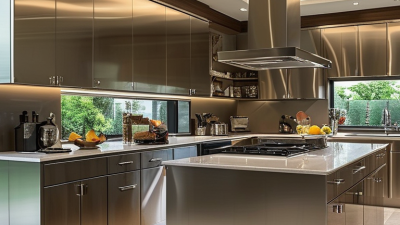
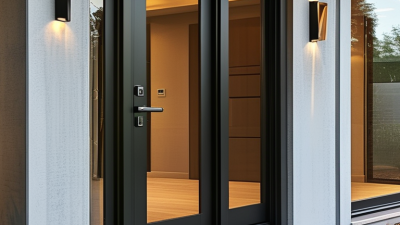
Choosing reliable China suppliers for Stainless Steel Kitchen Doors requires more than comparing catalog prices. The right partner should prove material quality, fabrication experience, and consistent delivery. Look for manufacturers that provide stainless steel grades, thickness options, surface finishes, and test documentation. Grade 304 suits many residential kitchens, while Grade 316 may perform better near coastal air or heavy moisture. Small details matter.
Stainless steel expert John E. Bringas has emphasized, “Material choice must match service conditions, not appearance alone.” That principle is useful when assessing Chinese suppliers. A polished sample may look impressive under showroom lights. However, the door should also open smoothly, resist fingerprints, and maintain its alignment after repeated use. Ask for hinge specifications, edge construction, welding methods, and packaging photographs. Request a physical sample before approving mass production.
No supplier is perfect. Some websites present excellent images but provide weak technical evidence. Others offer competitive prices but overlook installation tolerances. This guide examines leading China manufacturers through practical criteria, including factory capability, customization, quality control, certifications, communication, and after-sales support. It also considers lead times and export experience, because a beautiful door is not useful if it arrives damaged or fits poorly. Readers should verify every claim independently. That step can feel slow. It often prevents expensive mistakes.
Stainless steel kitchen doors are cabinet fronts made from corrosion-resistant steel.
They are designed for kitchens where moisture, heat, grease, and frequent cleaning are unavoidable. These doors may use solid stainless steel or a steel skin bonded to a stable core. Their appearance can be brushed, satin, polished, or colored with a durable coating. The finish changes how fingerprints and scratches appear.
In practical installations, I have seen stainless steel doors remain stable beside sinks and cooking areas. They resist swelling better than many wood-based panels.
Not just decoration.
Good doors also need accurate hinges, strong edge folds, and carefully finished welds.
Poorly finished corners can collect grease and become difficult to clean. A reliable supplier should provide material details, thickness options, load information, and sample panels before production.
Material grade matters.
For most indoor kitchens, 304 stainless steel offers dependable corrosion resistance. Coastal kitchens or areas exposed to salt may require a more resistant grade, such as 316. However, choosing a higher grade does not fix weak construction or careless installation.
Ask for clear inspection records and consistent color across every panel. Small details matter.
I still question perfectly polished samples because real kitchens create marks quickly. A practical brushed finish may be less dramatic, yet easier to maintain every day.
Chinese stainless steel kitchen door suppliers offer practical advantages for residential and commercial projects. Many factories combine metal processing, surface finishing, welding, and assembly under one roof. This can reduce coordination problems and shorten production schedules. In my experience, factory visits reveal details that catalogs often hide. Check corner joints, hinge alignment, protective film, and edge polishing. Small defects become obvious under bright kitchen lighting.
Chinese manufacturers also provide flexible customization. They can adjust door dimensions, handle positions, ventilation panels, textures, and brushed finishes. Stainless steel grades such as 304 and 316 may suit different environments. However, the correct grade should match humidity, cleaning chemicals, and usage frequency. A professional supplier should provide material reports and clear tolerance data. Request a sample before mass production. It saves trouble later.
Cost is another reason buyers compare Chinese suppliers. Large production capacity can support competitive pricing without removing essential quality controls. Reliable factories usually inspect incoming steel, welding points, coating consistency, and final packaging. Ask for inspection photographs and a written production schedule. Communication can still be imperfect. Time zones, translation, and changing specifications sometimes create misunderstandings. Detailed drawings and signed approvals help reduce them. I would not choose a supplier by price alone. After-sales response, replacement procedures, export experience, and honest limitations matter more than a polished quotation.
Comparing China’s leading kitchen door manufacturers requires more than checking catalog photos. The International Stainless Steel Forum reported global stainless steel production at about 58.4 million tonnes in 2023. This scale supports broad material access, but it does not guarantee better doors. Ask each supplier for the steel grade, thickness, surface finish, and test records. A 304 panel should be verified through mill certificates or independent testing, not only sales claims.
Production control matters. Review welding samples under direct light. Check corner alignment, hinge reinforcement, edge polishing, and protective-film removal. Request factory audit evidence, quality procedures, and corrective-action records. ISO 9001 certification can indicate a documented system, but the ISO Survey data shows certification is widespread in China. Certification alone cannot prove stable workmanship. Inspect three repeated samples, not one perfect sample.
Cost comparisons should include packaging, tooling, replacement parts, and delivery time. UN Comtrade trade data can help benchmark furniture flows under relevant HS codes, although classification is not always precise. Compare quotations using the same door size and hardware specification. Require salt-spray or humidity test results when coastal installation is expected. I have seen attractive samples fail at drilled hinge points. That detail is easy to miss. A realistic warranty should state response times, evidence requirements, and replacement responsibility. Some comparisons remain imperfect because suppliers measure quality differently. That uncertainty deserves written clarification before payment.
When comparing China’s stainless steel kitchen door suppliers, buyers should examine standards before appearance. A bright surface proves very little. The steel should have clear grade documentation, such as 304 for general kitchens or 316 where salt, moisture, or cleaning chemicals are severe. Material certificates should identify the grade, thickness, and manufacturing batch.
Hygiene matters every day. Door faces should have smooth, non-porous surfaces with minimal gaps around handles, hinges, and seals. Welds need to be even and easy to clean. Sharp corners, exposed screws, and trapped water can create problems during real kitchen use. The design should follow applicable food-hygiene and construction requirements in the destination market. If the door forms part of a fire-rated wall, verified fire-test evidence is also necessary.
Ask suppliers for dimensional drawings, corrosion-test data, surface-finish details, and inspection records. Independent testing is more reliable than a sales statement. Request samples and check whether the panel bends, the hinge sags, or the seal remains tight after repeated opening. Small defects matter. A supplier should also explain tolerances, installation conditions, and warranty limits. Standards do not remove every risk. Even a well-documented door may fail when installers use unsuitable screws or leave water inside the frame. That detail is often overlooked.
| Evaluation Dimension | Relevant Standard or Reference | Recommended Requirement for Stainless Steel Kitchen Doors | Typical Verification Method |
|---|---|---|---|
| Stainless Steel Grade | EN 10088; ASTM A240/A240M | Austenitic stainless steel should be clearly identified. Grade 304 is commonly used for general indoor kitchen environments, while Grade 316 or 316L is more suitable for chloride exposure, coastal locations, or frequent contact with salty cleaning agents. | Review the material certificate and verify chemical composition by supplier documentation or positive material identification testing. |
| Surface Finish | EN 10088-2; ASTM A480/A480M | The finish should be uniform, free from visible pitting, cracks, sharp grinding marks, oil residue, and excessive discoloration. Common finishes include 2B for functional surfaces and brushed finishes such as No. 4 for visible surfaces. | Perform visual inspection under consistent lighting and confirm the specified finish designation against the order documents. |
| Material Thickness | EN 10088-2; ASTM A480/A480M | The sheet thickness should be selected according to door size, frame construction, hardware load, and expected use. A practical specification should state the nominal thickness and the permitted thickness tolerance rather than relying only on a general description such as “heavy duty.” | Measure multiple points with a calibrated micrometer or ultrasonic thickness gauge and compare the results with the approved drawing and material certificate. |
| Dimensional Accuracy | Approved manufacturing drawing; applicable EN or ASTM dimensional tolerances | Door height, width, squareness, panel flatness, hinge position, and frame alignment should conform to the approved drawing. Tolerances should be agreed before production because no single universal tolerance applies to every kitchen door design. | Use calibrated steel rules, vernier calipers, feeler gauges, and diagonal measurements during final inspection. |
| Weld Quality | ISO 3834; ISO 5817, where applicable | Welds should be continuous where hygiene or structural design requires it, with no visible cracks, burn-through, open gaps, excessive spatter, or sharp projections. Welded areas should be properly cleaned and finished. | Carry out visual weld inspection and, for critical assemblies, use an agreed non-destructive testing method such as dye penetrant testing. |
| Passivation and Corrosion Resistance | ASTM A967/A967M; ASTM A380/A380M | After welding, grinding, or fabrication, heat tint and embedded iron contamination should be removed. Passivation or an equivalent approved surface treatment should be specified when enhanced corrosion resistance is required. | Check the treatment record and conduct an agreed free-iron, copper sulfate, or other suitable passivation verification test. Salt-spray testing should only be used when its duration and acceptance criteria are defined in advance. |
| Hygienic Design | EN 1672-2; ISO 14159 | Food-contact or food-preparation areas should have smooth, cleanable surfaces with minimized crevices, exposed threads, dirt traps, and inaccessible voids. Internal corners should be designed to support effective cleaning. | Review the design drawings and inspect the completed door for cleanability, accessible joints, drainage, and absence of contamination-collecting gaps. |
| Food-Contact Suitability | NSF/ANSI 51 where applicable; Regulation (EC) No. 1935/2004 for relevant EU applications; GB 4806.9 for applicable food-contact metal products in China | Where the door or its components can contact food, the stainless steel, coatings, sealants, lubricants, and other materials should comply with the regulations required in the destination market. Compliance should be assessed for the complete material system, not only the steel sheet. | Request declarations of compliance, raw-material information, and migration or extractive test reports when required by the destination-market regulations. |
| Door Hardware and Load Capacity | Approved engineering specification; manufacturer load calculations | Hinges, handles, latches, slides, and fasteners should be compatible with the door weight and operating cycles. Hardware exposed to moisture or cleaning chemicals should have suitable corrosion resistance and should not create inaccessible hygiene traps. | Verify hardware specifications, conduct alignment checks, and perform repeated opening-and-closing tests based on the agreed duty cycle. |
| Seals and Gaskets | Applicable food-contact and elastomer requirements in the destination market | Gaskets should be durable, replaceable where practical, securely retained, and resistant to the expected temperature, detergents, moisture, and cleaning frequency. The gasket profile should prevent water and food residue from accumulating. | Inspect gasket fit, compression, continuity, surface condition, and compatibility documentation for the intended operating environment. |
| Safety and Edge Treatment | EN 12100 for machinery risk assessment, where applicable; approved product safety specification | Exposed edges and corners should be deburred, rounded, folded, or otherwise protected. Doors should not create avoidable pinch, cut, impact, or unexpected closing hazards during normal operation. | Perform manual edge inspection, clearance checks, and functional testing of hinges, closers, latches, and stops. |
| Cleaning and Chemical Resistance | Cleaning-chemical manufacturer instructions; ASTM A380/A380M guidance | The selected grade and finish should tolerate the intended detergents and sanitizers. Chloride-containing cleaners, abrasive powders, and steel-wool tools should be avoided unless specifically confirmed compatible with the surface. | Review the cleaning procedure and, when necessary, conduct a documented compatibility test using the actual cleaning products and exposure conditions. |
| Traceability and Quality Documentation | ISO 9001 quality-management principles; EN 10204 inspection-document practice | Each production batch should be traceable to the stainless steel grade, heat or batch number, fabrication records, surface treatment, inspection results, and approved drawings. An EN 10204 3.1 inspection certificate may be requested for critical projects. | Audit the material certificates, inspection reports, production records, nonconformance records, and final release documents. |
China’s stainless steel kitchen door suppliers vary widely in quality, communication, and production control. The right supplier should fit your project, not just offer the lowest quote. Ask about stainless steel grade, sheet thickness, edge treatment, hinge capacity, and surface finish. For wet kitchens, confirm corrosion resistance and request material certificates. Clear technical drawings prevent costly misunderstandings.
Tips: Request a physical sample before approving mass production. Inspect the welds, corners, alignment, and protective film. Ask for inspection photos at key stages. Reliable suppliers explain tolerances, packaging, replacement procedures, and realistic lead times. Their answers should be specific, not copied from a sales brochure. Check whether the factory can handle custom sizes, drilling positions, and installation details. References from similar hospitality or residential projects can reveal more than attractive photographs.
Do not judge a supplier by polished images alone. A beautiful sample may hide weak hinges or inconsistent color under different lighting. Compare two or three quotations using identical specifications. The cheapest option may create higher installation costs later. Review payment terms and quality records carefully. No supplier is perfect. Even a strong process can miss a detail. Written approvals, pre-shipment inspection, and measurable acceptance standards remain essential.
This project evaluation framework prioritizes the factors that usually have the greatest effect on stainless steel kitchen door performance and procurement risk. Product quality and material compliance should be verified through mill certificates, grade confirmation, dimensional inspection, and surface-finish samples. Manufacturing capability, customization, lead time, quality control, and after-sales support should be assessed against your drawings, installation schedule, and contract requirements.